Monday, October 12, 2009

Lake Titicaca and the Floating Islands - Peru

Hola Amigos! We are a little behind on updating the blog but should be able to catch up soon! We are now in Colombia but still posting about our last stop in Peru. We´ve had a lot of trouble with the computers in internet cafes and viruses on my memory card. For about three days I was sure I´d lost all my photos but luckily a camera shop in Quito, Ecuador was able to recover them. Whew.

Onto Lake Titicaca and the Floating Islands of Puno, Peru. We left La Paz for the second time and started our journey north. Lake Titicaca is a huge lake that is on the border between Peru and Bolivia. Just a 30 minute boat ride away are forty small floating islands made of totora reeds that grow in the lake. These floating islands are the home of the Uros tribe which pre-dates the Incan civilization.

We went with a small tour group that dropped us off on one of the islands which was home to seven families. It was wild taking our first step onto the island and feeling the ground sink a bit with each step. We were given a demonstration of how they make the islands. The roots of the totora reeds and the dirt around them form the base of the island. They then pile the reeds themselves on top to form the ground. They have to dive down into the water with big spikes to secure the islands so they don´t float away. Covering the ground with the reeds is an ongoing and never ending job to replace the reeds that rot away. Each island has the expected lifespan of about 18 years. Below is the president of the island demonstrating the process and a local woman rowing back to the mainland.


The women on the island showed us their homes which are completely made of the totora reeds. Even their mattresses are made of them! One woman let us dress up in her clothes and I was given a brightly colored decoration that is worn by the president of the island during celebrations. The outfit Gemma´s wearing is more of a traditional outfit that all the women wear everyday. We love their hats.


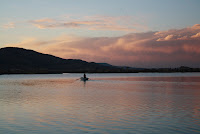
We took a ride on a canoe like totora boat to another island to visit with another group of Uros before taking the boat back to the mainland during a beautiful sunset. It was such a cool experience and amazing to see how these people live. Many of the youth of the tribe are now moving to the mainland, tired of life on these tiny islands and the hour commute each day to and from school. Because of this the guide informed us we were probably visiting the last generation to live on the islands full time even though this tribe´s been living there for hundreds of years.


Sunday, October 11, 2009

Bolivia vs Brazil World Cup Qualifier


So Brazil was already qualified for the 2012 World Cup and it was impossible for Bolivia to qualify at this point, but we still went and had a blast watching some football. We were told Brazil had never beaten Bolivia in Bolivia so we thought they might have a fighting chance, and you know what? They actually won. Granted Brazil was probably playing their C team but still. We also found it odd that Brazil was out on the pitch warming up 45 minutes before the match and Bolivia´s team never even came out until kickoff.

It was definitely the least excited crowd I´ve ever seen at a football match. When Bolivia scored their first goal early in the game I expected the chanting and cheering to intensify and the stadium to fall down. Only the Bolivians didn´t seem to really care. It was odd. Not even one flare went off until Brazil scored its only goal in the second half.

We had amazing midfield seats and it was a really sunny day. We rocked sweet Bolivia jerseys, ate cinnamon ice cream, drank hot flat coke and had a great afternoon. GO BO-LIV-IAR!!!

Friday, October 09, 2009

Huayna Potosi - Sky High in Bolivia


We climbed a 6088m mountain! We f-ing did it. It was the worst day of our lives, but we did it. I´m talking climbing with ice crampons and ice picks! I´m talking ZERO ice climbing or mountaineering experience. The route entails an exposed ridge and sections of steep ice, with a UIAA rating of PD (whatever that means, Please Don´t we´re guessing). We each had a moment where we almost slid down the mountain into an icy grave.
(rocking the crampons with the neons)


This was the most physically and emotionally demanding thing either of us had ever experienced. Near the end I nearly broke down crying from pure exhaustion. Gemma was a bucket of tears throughout the six hour accent.
(The happy couple before they realized what they were in for.)

I got through it by repeating "step by step, one foot in front of the other, its the only way to the top." Gemma got through it by repeating "strong, fit, healthy". There were many points during the final six hour climb when I didn´t think I´d make it. One such point was when Gemma asked how much longer and our guide told us four hours. It was 3am, the path ahead steep and actually quite dangerous. Sweet question.
We first had to climb two hours up to the base camp up rocky terrain carrying all of our equipment. We had our crampons, ice picks, snow suits, two pairs of gloves, fleece masks, sleeping bags, cameras, 4 liters of water, and snow boots.
The base camp sits at 5130 meters, leaving a final accent of 958m for the morning. We then had dinner at about 5pm and went to bed. We had to wake up at midnight in order to get ready for our 1am departure up to the summit. You start climbing at 1am so that you are walking on the snow while it is tightly packed. By 8am the snow starts melting and puts you at risk for an avalanche.

At base camp.


We had been climbing for about four hours or so when the sun started to come up. We took a break to take a couple pictures. The white in the foreground is snow and the white in the background below the horizon is clouds.


We finally made it to the top. The views were incredible but we were so tried we couldn´t even stand up to fully enjoy them. We just sat there in disbelief at what we´d just done. I let out a couple of long Yes!!!! yells and fell to the ground.


Views from the summit:

On the trip back down we passed by some of the most beautiful natural landscapes I´ve ever seen. Here is a great example of some of the passes we had to cross. It wouldn´t have been fun to fall into one of these crevices. On the way down we also had to cross over a massive crevice in the snow. The path was melting away and with our complete lack of energy after 8 hours of hiking plus what we´d done the night before it made the two foot jump seem like a certain leap of death.


After three hours back downhill to the base camp and we literally hit the ground.


We had another three hours down the rocky terrain to the bottom. We could barely walk and were cursing ourselves and our guide at this point. Neither of us had ever been this exhausted in our entire lives. It was an incredible experience standing atop the summit above the clouds. We´ll never forget it. Hard to forget the worst day of your life.

Monday, October 05, 2009

Ginger´s Paradise - Hoe, Hoe, Hoe we Go!

We found out about a volunteer program called Worldwide Opportunities on Organic Farms (Wwoofing) through a couple we climbed Machu Picchu with. They had just finished three months volunteering on an organic coffee farm in Hawaii. They had a fabulous time. You get your room and board for free while you are working so we figured it might be an interesting way to prolong our trip and also learn a thing or two along the way. My grandpa worked on a farm when he was young and I have always wanted to have a similiar experience. We found Ginger´s Paradise in Bolivia and emailed them to let them know we were coming.
Take a look at their website: http://www.gingersparadise.com/ Looks nice right? Food looks good? Well what it doesn´t mention is that they have three little kids, two of which will drive you freaking crazy. It also fails to mention that the family doesn´t believe in eating dinner because this is what causes the western world to grow fat. "We don´t do anything after lunch so why do we need to feed our bodies?" UHHH maybe because you actually do two and a half hours of hoeing after lunch!

Here is Gemma in action:


It was pretty much a nightmare. On our first day, about two or three hours into our first Hoeing session, Gemma asked me how long I thought we´d last. I disappointingly thought I´d only be able to last for seven days. We lasted six. We had planned on staying two or so weeks.
They literally just stuck two hoes in our hand the first morning and pointed out a few plants (or were they weeds?) that we needed to avoid hoeing up and then left us alone to do the work. He came back two hours later wondering were the avacado tree was he´d pointed out to me as an example of what not to hoe. He then found another tree he held up in the air to show us that we´d killed two of the three avacado plants in the area. Gemma specifically remembered hoeing up the second tree. Off to a crackin start.
The farm sat on a beautiful plot of land a couple hours away from Santa Cruz. There was nothing in the town which was a problem when we went to try to find some food for dinner. Christobel, the man of the house, went into Santa Cruz one day and asked us if we needed anything. We told him potato chips and cookies. He came back with neither. Thanks.

Christobel also raised bees on the farm. I was excited to don a bee suit and help him but the first 4 days were cloudy and you need a sunny day to work with the bees. Then Christian arrived. This kid from Colorado who also breeds bees in his back yard. He and Christobel hit it off tremendously and really made Gemma and I realize how much we weren´t cut out for this farming business.

I longed for a different job after three days of hoeing weeds and grass. I was rewarded with the job of using a machette to chop up horse shit. And do you see my outfit? I wish I had a better pic. The sand flies were so bad that even though it was hot out we had to wear long pants and this white dress shirt he gave me. I looked like the leader of a religious cult. This provided many laughs though as I developed my preaching skills and sermon throughout the week.

It was miserable. I really could write about how much it sucked all night. We wore tons of bug spray (which we were informed is man-made poison for our skin) and were still eaten alive by sand flies. We also wore pleny of sunscreen while we were baking away in the fields and were informed that this too is bad for us and full of chemicals. Essentially anything man-made was bad for you according to their 10 and 13 year old. Their kids names were Dizzy, Nova and Ginger. Here they are being annoying.

We did manage to get one day off that we spent having a picnic near the river. It was peaceful and good to get away from the boys. We left when Chris came and found us and told us off for having our room a mess.

We aren´t going to give up on Woofing though. We´ve applied to a farm in the Cook Islands and might try to find a farm near the Caribbean coast in Colombia. I think we can chalk up this poor experience to a less than friendly family who was less than forthcoming on all the details of their lifestyle on the farm.

Saturday, September 26, 2009

The Mines in Potosi, Bolivia

We stopped at a little mining town called Potosi. It probably wouldn´t like me describing it that way since it was once one of the largest and weathliest cities in the world and still is the highest city in the world at 4090m. We went into the mines guided by a former miner. The conditions are dark, cramped and the air causes most miners to die of silicosis by age 40.


Tradition runs deep in the mines and most of the men that work there (women aren´t allowed, nor is salt, or odd numbers) have literally grown up in the mines. A few we spoke to while we were on our tour explained that they learned everything they know in the mines, especially how to drink. While you must technically be 18 years old to work in the mine, often the boys start as young as 12 because their fathers want them to work on their team.

The mine is run as a co-operative and every man works in a small group in business for themselves. They work six days a week and often do not come out of the mines for 12 hours at a time. All the miners chew coca leaves in order to be able to keep working without having to stop to eat. Chewing coca leaves, which the majority of Bolivians do, provides them with enough energy and vitamins to work long shifts without needing a proper meal. Its quite odd seeing elderly women chew coca as I´m used to mostly redneck toughguys chewing tobacco in the States. Below is a pic of the coca leaves, cigarettes and 98% alcohol that tour groups bring the miners as gifts.


They sell dynamite to anyone with 15Bob´s (about 2 dollars). We bought some and blew it up after the tour.


They pray to the Devil, El Tio, who they believe owns the mine. Here is a statue where they offer him coca leaves and pour alcohol onto him everytime they enter the mine to ask his permission to work there. A few times a year they also splatter blood from the llama they have sacrificed in his honor. The dark splatter above the statue below is the blood! It´s actually really funny to see the miners pour out part of their alcohol or energy drinks in honor of El Tio or PachaMama (mother earth). Its alot like pouring some out for your homies.


We had to climb down several shafts to go lower and lower into the mine where the workers were. It´s literally pitch black dark down there except for where your head torch shines. I asked one of the miners if he was ever scared when he first started mining 25 to 30 years ago. He told me that you have to be a little scared because the Devil plays tricks on you when you are new. He said you hear voices and feel rocks being thrown at you when no one is around and that this is the Devil´s way of testing you.


Here we are talking wih a small team of miners. The two next to Gemma in the first picture are father and son.


It was an amazing experience seeing the conditions these miners have been working in for hundreds of years and where nearly 30,000 slaves died from long hours in the horrible conditions. It was really humbling to see their way of life and how hard they work just to get by. I tried lifting one of the bags of rocks they carry up several "floors" to the mines entrance and honestly could barely lift it off the ground despite my massive biceps.

Our guide informed us that experts are predicticing the mine will run dry in about twenty years leaving the future of Potosi very much in quesiton.

And finally, on a lighter note, I got to see some miners carts. This is what I had envisioned I´d see full of silver and gold flying all over the tracks down in the mines like something out of the Goonies or Indiana Jones. Sadly they were empty and hardly in use.